
How Much House Can You Afford in Mid-Michigan: A First-Time Buyer's Guide
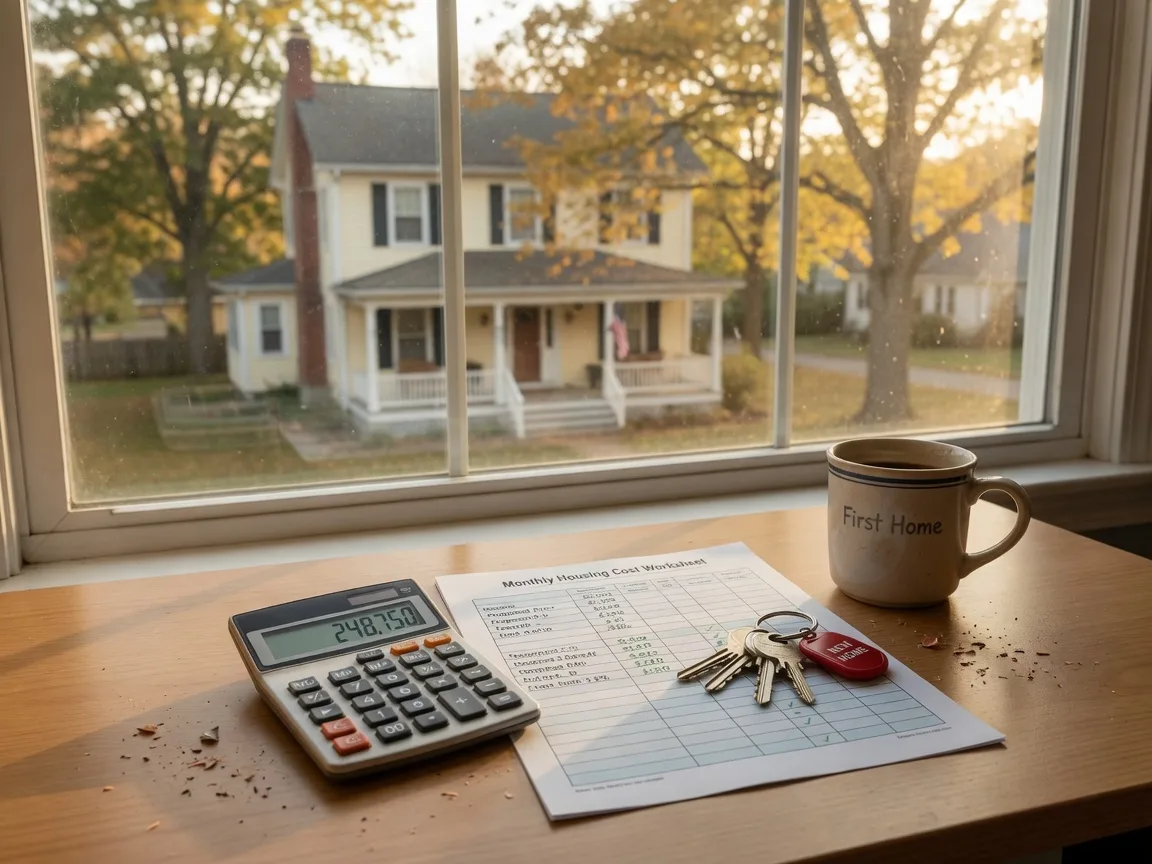
The amount of house you can afford in Mid-Michigan depends on your gross monthly income, your current debts, your down payment, and today's mortgage rates, and the simplest starting point is the 28/36 rule: keep housing at or below 28% of gross income and total debt at or below 36%. With 30-year fixed rates averaging 6.95% in September 2026 per Freddie Mac, a household earning $5,000 a month typically lands in a comfortable range of roughly $180,000 to $220,000, well within reach across most of Genesee, Oakland, and Livingston Counties, where median sold prices remain below the statewide figure. As a licensed REALTOR with Keller Williams First, I help first-time buyers across Mid-Michigan turn this kind of math into a search that fits their real budget, not just their approval letter.
Key Takeaways
- Start with the 28/36 rule. Lenders look for housing costs under 28% of gross monthly income and total debts under 36%, though many programs allow flexibility.
- Rates shape the math. The average 30-year fixed rate was 6.95% in mid-September 2026, up from 5.98% in late February, so run your budget at today's rate and a rate a point higher.
- Mid-Michigan is still a value story. Genesee County sold in the mid-$190,000s in early 2026, and Michigan's statewide median home price was about $254,900 in January, per Redfin.
- You do not need 20% down. The typical first-time buyer puts 10% down, and 3% to 3.5% down programs plus Michigan assistance are widely available.
- Affordability is more than the payment. Closing costs, taxes, insurance, utilities, HOA dues, and maintenance all belong in your real monthly number.
Whether you are searching in Grand Blanc, Fenton, Clarkston, Hartland, or a smaller community nearby, this guide walks you through the exact steps I use with first-time buyers to answer the question behind every home search: how much house can you actually afford?
How Much House Can You Afford in Mid-Michigan? The Math, Step by Step
Affordability is not one number. It is your income, your debts, your down payment, and your local costs all added together. Work through these steps in order, and you will have a realistic budget before you ever attend a showing.
Step 1: Know Your Gross Monthly Income
Lenders look at your gross income, the amount before taxes and deductions. Add your salary or wages, and include consistent income from side work, bonuses with a history, or rental properties if you have documentation. Two incomes are generally combined when you buy together, which is why many first-time buyers shop as a couple or with a co-borrower.
Step 2: Apply the 28/36 Rule
The 28/36 rule is the classic affordability guideline. It says your housing payment, including principal, interest, property taxes, and homeowners insurance, should stay at or below 28% of gross monthly income, and your total monthly debt, including that housing payment plus car loans, student loans, credit cards, and other obligations, should stay at or below 36%. Many lenders approve higher ratios with strong credit and reserves, so treat 28% and 36% as comfortable guardrails rather than ceilings, as Bankrate explains.
Here is how it plays out for a household earning $5,000 a month, a typical middle-income budget in Mid-Michigan:
- 28% housing cap: $1,400 a month for principal, interest, taxes, and insurance.
- 36% total debt cap: $1,800 a month for every debt payment combined.
- Room for other debt: if you pay $350 a month on a car and $200 on student loans, you have about $1,250 left for housing while staying under 36%.
Step 3: Turn That Payment Into a Purchase Price
Now you reverse the math. At a 6.95% 30-year fixed rate, a $180,000 loan carries a principal-and-interest payment of roughly $1,190 a month. Add property taxes and homeowners insurance, which vary by community and typically add a few hundred dollars a month in Mid-Michigan, and you are near a $1,400 total payment. With 10% down, that supports a purchase price around $200,000. You can build this math yourself on my mortgage calculator, then refine it with your lender's real numbers.
Lenders now allow programs with higher debt-to-income ratios, such as FHA loans up to about 56.9%, but borrowing at the very edge of qualification leaves little room for surprise expenses. My advice is consistent: let your comfortable number, not your maximum number, drive the search.
Step 4: Add the Costs That Live Around the Mortgage
The mortgage payment is only part of the picture. Your real monthly housing cost includes utilities, internet, HOA dues if the community has them, and routine maintenance, commonly estimated at about 1% of the home's value per year. Every one of those belongs in the budget you bring to the table.
What Do Current Rates Mean for Your Budget in 2026?
Mortgage rates move the affordability needle more than any other single factor. The average 30-year fixed rate was 6.95% for the week ending September 17, 2026, according to Freddie Mac's Primary Mortgage Market Survey, up from a 2026 low of 5.98% in late February and from 6.26% a year earlier. Rates have been climbing through spring and summer, which is exactly why locking a rate and getting pre-approved matters this year.
The practical effect: every half-point of rate adds or removes thousands of dollars of buying power. A $200,000 home with 10% down costs roughly $1,190 a month in principal and interest at 6.95%, but about $1,080 a month at 5.98%, a difference of more than $110 a month, or roughly $40,000 in interest over the life of the loan. Run your own scenario at today's rate and at a rate one point higher, and you will know exactly how much buffer you have if rates keep climbing.
How Much Do You Really Need for a Down Payment?
The days of needing 20% down are squarely over. According to the National Association of Realtors 2025 Profile of Home Buyers and Sellers, the median down payment for first-time buyers was 10%, the highest since 1989, while many put down far less. Your options typically include:
- Conventional loans: as little as 3% down, with private mortgage insurance until you build equity.
- FHA loans: 3.5% down with a credit score around 580 or higher, a popular first-time buyer path.
- VA and USDA loans: 0% down for qualifying veterans and eligible rural buyers, both strong options in Mid-Michigan.
- Michigan down payment assistance: programs through MSHDA and local lenders can help cover the down payment and even closing costs. My guide to Michigan down payment assistance programs breaks down who qualifies and how to apply.
On a $200,000 purchase, 10% down is $20,000, 3.5% is $7,000, and 3% is $6,000. That range shows why saving a plan, not a giant pile, is what actually gets most first-time buyers into a home. Your credit score shapes which of these doors open, so review where yours stands before you start, my guide to credit scores and Michigan home buying walks through the thresholds.
What Else Belongs in Your Budget?
First-time buyers are often surprised by the costs around the purchase. Plan for these so nothing derails your closing:
- Closing costs: typically 2% to 5% of the purchase price for title insurance, lender fees, appraisal, and recording, though Michigan buyer closing costs are often lower than the national average.
- Inspection and appraisal: a few hundred dollars for a professional inspection is the best money you will spend, my touring checklist and home inspection guide show you what to expect.
- Moving and immediate repairs: budget for the truck, the paint, and the small fixes you will want in the first month.
- An emergency fund: lenders and experienced agents both suggest keeping a cash cushion after closing, because the furnace does not check your bank balance before it fails.
The full picture, from utilities to the water heater's final days, is laid out in my guide to the hidden costs of homeownership, and the true cost of homeownership if you want the deeper dive.
Quick Answers to Common Questions
- How much house can I afford on $70,000 a year in Michigan? About $1,633 a month on housing at 28% of gross income. At a 6.95% rate with 10% down, that typically supports a home in the $230,000 to $260,000 range before accounting for other debts.
- What house price can I afford with a $1,400 monthly payment? Roughly $200,000 with 10% down at a 6.95% rate, since principal and interest on a $180,000 loan run about $1,190 a month plus taxes and insurance.
- Do first-time buyers really need 20% down? No. The median first-time buyer puts 10% down, and 3% to 3.5% programs plus Michigan down payment assistance are common routes into homeownership.
- Are Mid-Michigan home prices affordable compared to the state? Generally, yes. Genesee County's median sold price was about $196,000 in early February 2026, per MLS data reported by the Detroit Free Press, below Michigan's statewide median of about $254,900 in January 2026, per Redfin.
- What is the best first step to figure out my budget? Get pre-approved first. It locks your rate picture, reveals your true price range, and makes every offer you write stronger. My pre-approval guide covers the documents and lenders you will need.
Four Mistakes That Stretch First-Time Buyer Budgets
After more than 20 years in real estate, I can tell you the biggest affordability problems are rarely the market, they are usually the budget. Watch out for these:
- Buying at the top of your approval. A lender-approved maximum is not a comfort recommendation. If the top of your range needs a roommate to work, it is too high.
- Forgetting taxes and insurance rise. Michigan property taxes and homeowners insurance both move, so leave room in the payment for future increases rather than assuming year one is the ceiling.
- Skipping the pre-approval conversation. Guessing your range wastes showings and can cost you the home you actually want. Start with pre-approval, then search with confidence.
- Ignoring the timeline. The full path from offer to keys usually runs four to eight weeks, and knowing the timeline keeps you from signing up for double payments or rushed moves.
If renting is on your mind too, the renting versus buying comparison puts both options side by side in Michigan dollars, and my complete first-time buyer guide covers the entire journey from saving to closing.
How I Help First-Time Buyers Across Mid-Michigan
I have walked first-time buyers through every market climate in the past decade, from bidding wars to rate bumps, and the fundamentals never change: honest numbers, a budget that breathes, and a plan for the whole process, not just the offer. My 12-step home buying journey guide maps every stage, and I stay personally involved from your first question to your front-door keys.
I serve buyers throughout Genesee, Oakland, Livingston, Lapeer, Shiawassee, Saginaw, and Tuscola Counties, including Grand Blanc, Fenton, Linden, Davison, Holly, Clarkston, Lake Orion, Hartland, and surrounding communities. Prices and taxes differ from town to town, which is exactly why a local number beats a national trend line.
Start with pre-approval or a quick conversation about your numbers. Contact me or call 810-513-3335, and I will help you figure out how much house you can afford and find it. You can also schedule a free consultation at a time that works for you.
Tags
Frequently Asked Questions About Home Affordability in Mid-Michigan
How much house can I afford with a $60,000 salary in Michigan?
Using the 28/36 rule, a $60,000 salary supports roughly $1,400 a month in housing costs. At 2026 rates near 6.95%, that often works out to a home in the $180,000 to $210,000 range, depending on taxes, insurance, and your other debts.
What is the 28/36 rule for mortgages?
The 28/36 rule says no more than 28% of your gross monthly income should go to housing and no more than 36% to all debts combined. Lenders use these ratios, with some flexibility, to size the loan you qualify for.
How much do I need for a down payment as a first-time buyer?
The typical first-time buyer puts 10% down, but programs allow 3% to 3.5%, and VA and USDA loans allow 0%. Michigan also offers down payment assistance for eligible buyers, so don't assume you need 20%.
Should I get pre-approved before I shop for a home?
Yes. Pre-approval shows what a lender will actually lend you, makes your offer stronger, and keeps your search focused on homes that fit a comfortable budget instead of ones that stretch it.
Related Reading
- How to Get Mortgage Pre-Approval in Mid-Michigan
- Michigan Down Payment Assistance Programs for First-Time Buyers
- What Credit Score Do You Need to Buy a Home in Michigan?
- The Hidden Costs of Homeownership
- Renting vs. Buying in Mid-Michigan: A Financial Comparison
- The First-Time Home Buyer Guide for Mid-Michigan
- From Contract to Keys: The Home Buying Timeline
- Mortgage Calculator
- The 12-Step Home Buying Journey Guide
- About Joyce England, REALTOR
- Contact Joyce England
- Mid-Michigan Communities I Serve

Keller Williams First · Licensed since 2014 · 20+ years of real estate industry experience · 810-513-3335
Know Your Numbers Before You Look
Not Sure How Much House You Can Afford?
Let us run your numbers together. I will help you build a realistic budget, connect you with trusted local lenders, and start your search in the right price range. No obligation, just honest guidance.
Start My Home SearchOr call 810-513-3335