The Role of Technology in Modern Real Estate
SEO & Article Metadata
Focus Phrase: Role of Technology in Real Estate
Meta Description: How technology has transformed real estate — virtual tours, digital marketing, AI pricing tools, and online signing — and how Joyce England uses tech to benefit clients.
Technology has fundamentally transformed real estate over the past decade. Virtual tours, drone photography, AI-powered pricing models, digital marketing platforms, and online document signing have changed how buyers search for homes, how sellers market their properties, and how agents deliver results. For Mid-Michigan REALTOR® Joyce England, technology is a powerful tool that accelerates the process and expands reach — but the personal relationship, local knowledge, and honest guidance remain the foundation of every transaction. The best outcomes happen when smart technology meets genuine human expertise.
How Has Technology Changed the Real Estate Industry?
When I started my career in real estate more than 20 years ago — working behind the scenes in administration, marketing, and transaction processing — the tools of the trade were very different. MLS listings lived in binders. Marketing meant newspaper ads and printed flyers. Showings required physical钥匙, a car, and an entire Saturday afternoon. Buyers relied almost entirely on their agent's knowledge because there was no way to browse listings from your couch at midnight.
Today, the landscape is unrecognizable. Technology has touched every part of the real estate lifecycle, from first search to closing day. Here is how the most significant innovations are shaping the industry right now.
Virtual Tours and 3D Walkthroughs
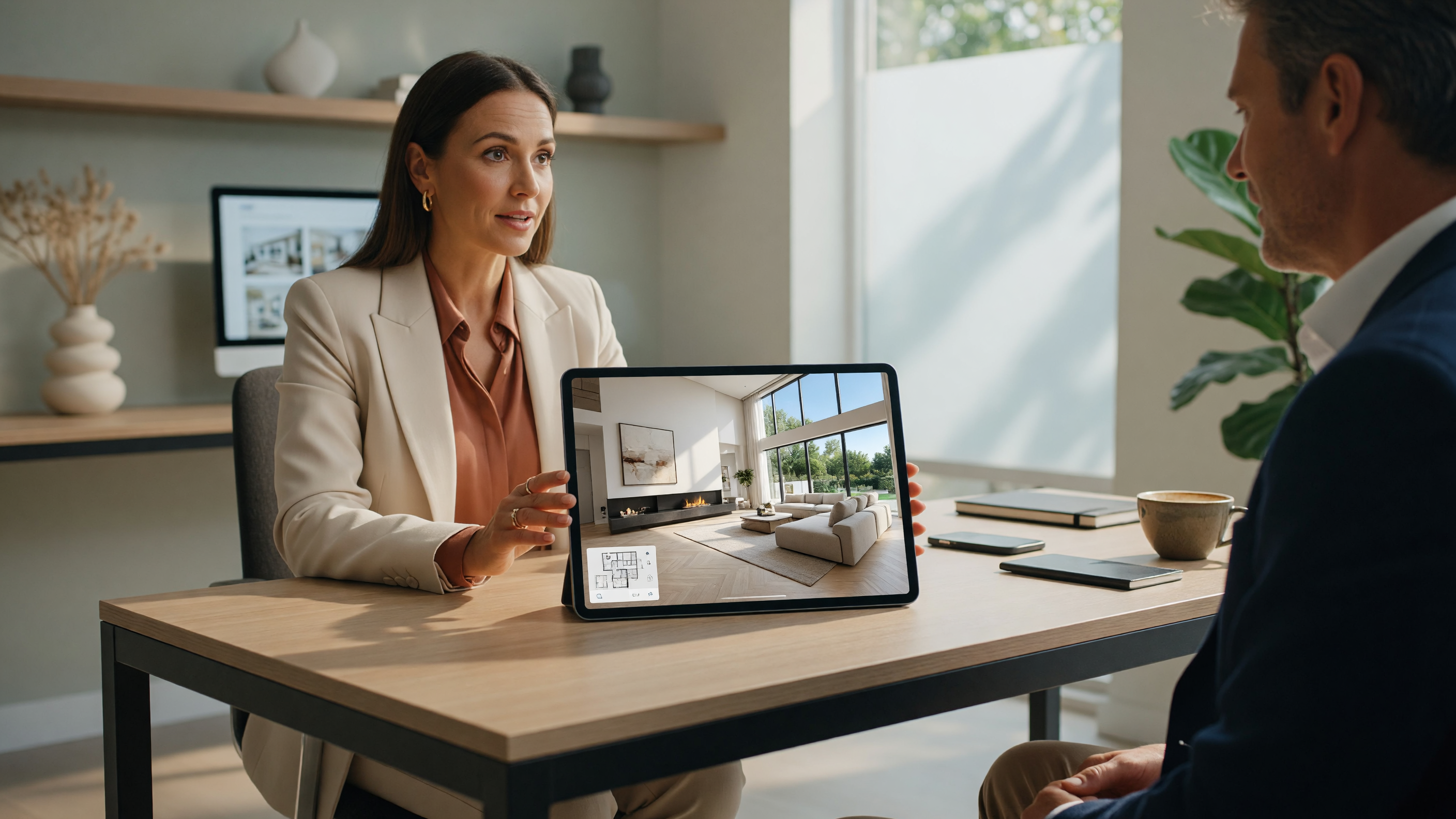
Virtual tours have become one of the most impactful tools in modern real estate marketing. Platforms like Matterport and similar 3D scanning technologies allow buyers to walk through a property from their phone or laptop, exploring every room, closet, and corner in photorealistic detail. For out-of-state buyers relocating to Mid-Michigan, this technology is transformative. Instead of flying in blind or relying solely on a handful of listing photos, they can tour a dozen homes in an evening and arrive for in-person showings already confident about which properties deserve a closer look.
I use virtual tours strategically. For properties that merit them — particularly luxury homes, waterfront properties, and listings that will attract relocating buyers — a high-quality virtual walkthrough is part of my standard marketing approach. It extends the reach of your listing far beyond the local market and gives every potential buyer an equitable, detailed first look.
That said, virtual tours are a complement, not a replacement, for in-person experience. Nothing replaces walking through a home, feeling the flow of the floor plan, hearing the neighborhood, and noticing things that no camera captures. The technology helps buyers narrow the field. The showing makes the decision.
Digital Marketing and Online Exposure
Modern real estate marketing is a multi-channel digital operation, and the agents who understand this deliver significantly more exposure for their listings. Here is what a comprehensive digital marketing strategy looks like in 2026:
- MLS syndication: Every listing automatically feeds to JoyceEngland.com, Realtor.com, Redfin, Homes.com, and dozens of additional platforms, giving properties instant national exposure.
- Social media advertising: Targeted campaigns on Instagram, Facebook, and YouTube put listings in front of buyers based on location, price range, and lifestyle interests. A well-managed social campaign can generate hundreds or thousands of qualified impressions within the first 48 hours.
- Professional photography and video: High-quality visual content is non-negotiable. Professional photography, aerial drone footage, and listing videos are standard tools in my marketing toolkit. Homes with professional photos sell 32% faster on average, and drone footage adds critical perspective for properties with land, lake access, or unique settings.
- Email marketing: Targeted email campaigns to buyer databases, past clients, and referral networks keep properties visible to motivated audiences.
- Agent websites and SEO: A well-built agent website with strong local SEO ensures that when buyers search "Fenton MI homes for sale" or "Grand Blanc REALTOR," they find the right resource — not a random national portal.
In my 20+ years of marketing experience — much of it spent creating advertising campaigns, managing social media, and coordinating events for other agents — I developed a deep understanding of what makes properties stand out online. That behind-the-scenes marketing expertise is now a direct advantage for my clients.
AI-Powered Pricing and Market Analysis
Artificial intelligence is increasingly influencing how properties are priced and evaluated. Automated Valuation Models (AVMs) like online valuation tools, Redfin's Estimate, and similar tools use machine learning algorithms to estimate home values based on comparable sales, market trends, and property characteristics. These tools have improved dramatically, but they still have meaningful limitations.
Here is what AI pricing tools do well: they provide a fast, data-driven starting point. For a seller casually wondering what their home might be worth, or a buyer trying to gauge whether a listing is priced fairly, these estimates offer a useful ballpark.
Here is where they fall short: they cannot account for the condition of a specific property, recent renovations, unique features like a finished basement or lake access, the micro-neighborhood dynamics that affect value on a block-by-block basis, or current buyer demand in a particular price range. A model trained on county-level data cannot tell you that homes on a specific street in Grand Blanc are selling $15,000 above estimate because of a newly opened school or a recent infrastructure improvement.
I use AI-driven tools as one input among many. My pricing strategy combines comparative market analysis, current absorption rates, local market intelligence, and an honest assessment of a property's condition and appeal. The result is a pricing blueprint that is both data-informed and grounded in local reality — something no algorithm can replicate on its own. For a deeper look at how pricing works in today's market, see our Summer 2026 Market Update.
Online Document Signing and Digital Transactions
The days of meeting at a title company with a stack of paper and a pen are evolving. Digital transaction platforms and e-signature tools have streamlined the paperwork process enormously. Buyers and sellers can now review, sign, and return contracts, disclosures, addenda, and closing documents from their phone or computer — at any hour, from any location.
For relocating clients especially, this is a game-changer. When you are buying a home in Mid-Michigan from three states away, the ability to sign documents digitally means you do not need to overnight paperwork or schedule a Power of Attorney for routine transactions. I guide clients through every document, explain what they are signing, and ensure nothing falls through the cracks — all while keeping the process efficient and secure.
That said, I am firm about one thing: technology should simplify the process, not replace the explanation. Every document a client signs should be understood, not just clicked through. I take the time to walk through disclosures, contracts, and addenda in plain language. You will never wonder what you just agreed to.
Data-Driven Market Insights
Beyond individual property transactions, technology provides powerful tools for understanding market trends. Real-time MLS data, trend analytics, heat maps, and absorption rate calculators allow agents to give clients evidence-based guidance rather than gut feelings. When a buyer asks, "Is this a good time to buy?" or a seller asks, "Should I list now or wait three months?" the answer should be grounded in data.
I regularly share market insights with my clients — neighborhood-level pricing trends, inventory levels, days-on-market analysis, and comparable sales data that help inform decisions. Technology makes this information accessible; experience and local knowledge make it actionable. You can see an example of this data-driven approach in our 2026 Home Buying Guide.
Why the Personal Touch Still Matters
Here is what I have learned across 20+ years in real estate: technology is an extraordinary tool, but it is not a relationship. The most important things I provide as a REALTOR® cannot be digitized.
I know which neighborhoods in Genesee County have hidden flood risks that do not show up in an online listing. I know which school districts are trending upward and which subdivisions have deferred maintenance issues. I know the listing agents, the title companies, the inspectors, and the lenders — and I know who does excellent work and who does not. I know that a seller who seems difficult is actually overwhelmed, and that a buyer who keeps rejecting homes is looking for something they have not yet articulated.
Technology gives me better tools to serve you. But the service itself — the listening, the advising, the negotiating, the problem-solving at 9:00 p.m. on a Tuesday when an inspection report goes sideways — that is the part that has not changed since day one. And it is the part my clients value most. You can read more about the lessons I have learned over two decades in this business.
How I Use Technology to Benefit My Clients
Here is a summary of how technology specifically enhances the experience when you work with me:
- For sellers: Professional photography, drone aerials, virtual tours, targeted social media campaigns, MLS syndication across every major platform, and data-driven pricing strategies that maximize exposure and attract competitive offers.
- For buyers: Custom search alerts, virtual tour access for remote previewing, real-time market data dashboards, digital document signing for seamless transactions, and video consultations for relocating clients who cannot be on the ground full-time.
- For investors: Rental market data, cap rate analysis, cash flow modeling, and trend tracking across the communities I serve.
Whether you are buying your first home, listing a luxury property, or evaluating an investment opportunity, I bring the full weight of modern technology — and two decades of real-world experience — to every transaction.
The Full Marketing Stack: How Technology Meets a Listing
When a listing goes live, technology carries it across multiple channels working together:
- Professional photography and videography. High-quality photos, walkthrough videos, and virtual tours are the foundation of every listing presentation.
- Single-property websites. A dedicated site for the home gives buyers a focused, polished destination for photos, floor plans, and details.
- MLS syndication. The listing is distributed to every major real estate platform and portal so it reaches the widest possible audience.
- Social media and video distribution. Targeted posts and video clips keep the listing in front of local buyer networks and beyond.
- Email and network activation. Direct outreach to past clients, buyers in the system, and local professionals surfaces the home to people already looking in the area.
Each channel reinforces the others. The home gets broad exposure through syndication, sharp presentation through photography and video, and qualified attention through targeted outreach — all coordinated in a single marketing plan.
Ready to Experience the Difference?
Technology moves fast, but the fundamentals of excellent real estate service do not change: honesty, expertise, communication, and a genuine commitment to your goals. When you combine modern tools with an agent who has spent 20+ years learning this business from the inside out, you get a transaction that is efficient, informed, and supported at every step.
Book a consultation, call me at 810-513-3335, or reach out through my Contact Form. Let's put technology — and experience — to work for you.
Frequently Asked Questions
How accurate are online home value estimates like automated valuation tools?
Online valuation tools provide a useful ballpark but are not a substitute for a professional comparative market analysis. They cannot account for property condition, unique features, recent renovations, or hyper-local market dynamics. I use these tools as one input alongside my own data analysis and local expertise to set accurate, competitive pricing.
Can I buy a home in Mid-Michigan entirely remotely?
Yes. Virtual tours, video walkthroughs, digital document signing, and remote consultations make it entirely possible to complete a real estate transaction from another state. I guide relocating clients through the entire process remotely, and most find that technology makes the experience smoother than they expected.
Do you use drone photography for all listings?
I include professional drone aerial photography for properties where it adds value — particularly homes with large lots, waterfront access, acreage, or unique settings. For standard suburban listings, professional ground-level photography is the baseline. Every listing receives a tailored marketing plan.
Will AI replace real estate agents?
AI is changing parts of the industry — particularly search, data analysis, and document processing — but it cannot replace the negotiation skill, local market expertise, emotional intelligence, and fiduciary responsibility that a licensed REALTOR® provides. The best outcomes happen when technology and human expertise work together.

Keller Williams First · Licensed since 2014 · 20+ years of real estate industry experience · 810-513-3335
Modern Tools. Proven Experience.
Let Technology Work for Your Next Move
From virtual tours to data-driven pricing to seamless digital transactions, I combine the best of modern technology with 20+ years of hands-on expertise.
Schedule a ConsultationOr call 810-513-3335